September 10, 2026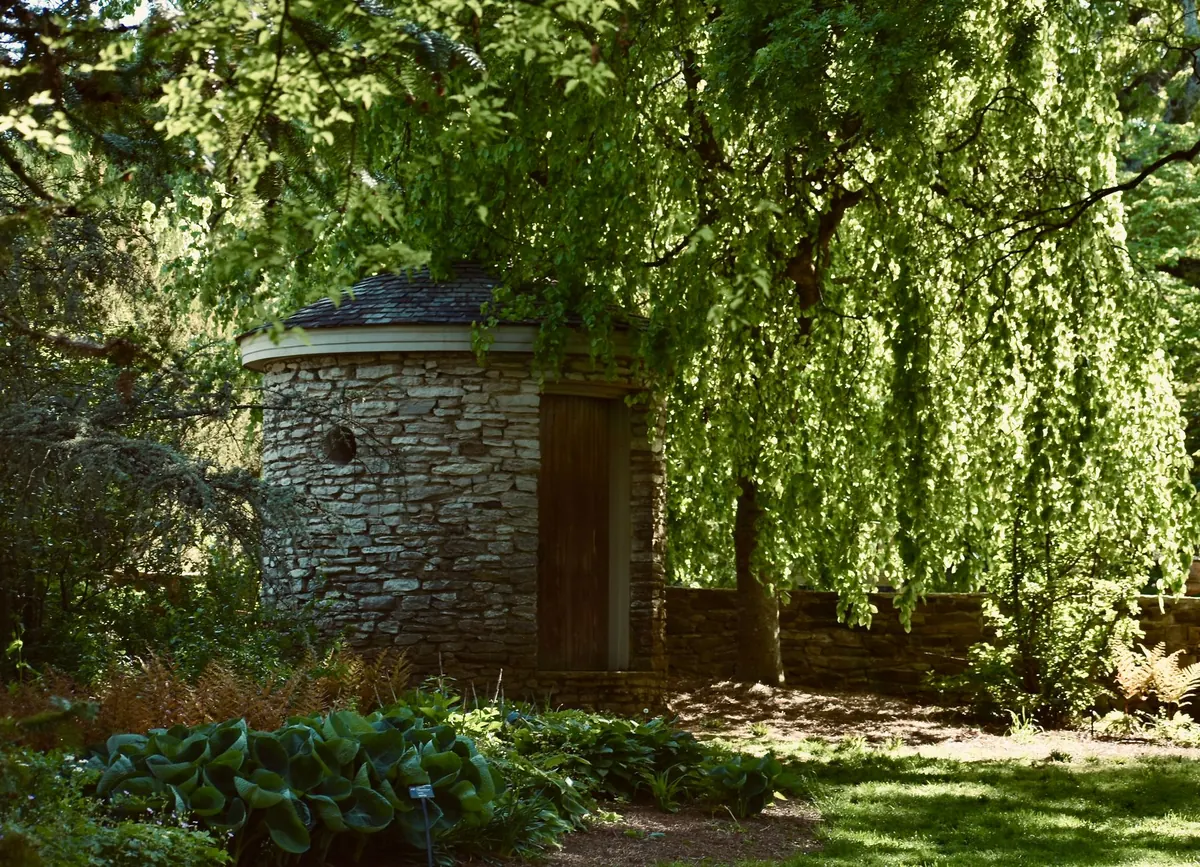
There is a tower on a hill in Worcestershire that has never defended anything, never been lived in for long and never earned a penny. Broadway Tower was put up in 1799 so that the Earl of Coventry could see it from his park at Croome, and so that anyone climbing it could look out over half a dozen counties. It is a building with no job, and that is precisely the point. It is a folly.
The Basic Definition
An architectural folly is a building or structure made primarily for ornament: for the eye, for the mood or for the joke, rather than for use. The term is loose, and historians squabble happily at the edges, but most follies pass two rough tests.
The first is the purpose test. Ask what the building was meant to do. If the honest answer is "nothing much" or "be looked at", you are probably standing in front of a folly. Where a folly does have a job, the job is usually subordinate to the effect: a sham ruin that happens to carry a footpath over its broken arch, or a tower with a single room at the top, reached by a spiral stair, for a picnic and a view.
The second is the proportion test. Follies are disproportionate. Too tall for the village, too grand for the acre it stands in, too expensive for any sensible return. A miniature castle guarding a shrubbery; a stone pineapple the height of a person crowning a garden pavilion at Dunmore in Stirlingshire, built in the 1760s; a tower shaped like nothing on earth at Barwick Park in Somerset. Sometimes the disproportion is the whole joke.
The word comes from the French folie, meaning foolishness. By the eighteenth century, English landowners were using it, often affectionately, for buildings that made no commercial sense but plenty of aesthetic sense. Many were built as a way of signing the landscape: a classical temple to close a vista, a gothic tower to give a hill a silhouette, a hermitage to give a walk a story.
Folly, Eyecatcher, Sham Ruin: Sorting the Vocabulary
These words get used interchangeably, which is a shame, because a few of them mean quite specific things. A quick working glossary:
- Folly — the umbrella term for a building built for show rather than use.
- Eyecatcher — a folly sited to be seen from a particular spot: the far end of a ride, the top of a slope, the view from a library window. Many eyecatchers are also landmarks for the surrounding countryside.
- Sham ruin — also called a fake ruin or artificial ruin. Deliberately built to look old, broken and abandoned. The Ruined Arch at Kew and the ruined abbey at Painshill are well-known English examples; both were new when they were made, which was the joke.
- Prospect tower or belvedere — a tower whose purpose is the view from the top. Genuinely useful, so it sits right on the boundary of folly territory, though the good ones are ornamented well beyond practicality.
- Temple, obelisk, pyramid, alcove, seat, hermitage — standard ornaments of the eighteenth-century landscape garden. The seat is for sitting, which sounds functional until you notice it is a miniature Doric temple with seating for three.
How to Tell a Folly from a Genuine Ruin
This is the question that trips up most beginners, and the honest answer is that a single glance will not settle it.
Start with history. A real ruin is usually the remains of something that once worked: an abbey, a castle, a mill, a manor house. Ask what the building was for in its working life, and whether that use is plausible at this scale and in this place. A ruined abbey in a private park, with no village, no water and no road, deserves a raised eyebrow.
Then look at the decay itself. Designed decay has a certain tidiness. Ragged wall tops may be made of neatly dressed stone with fresh-looking mortar behind them; a "broken" arch may be broken at exactly the height that makes a useful gateway; window openings may have no sill, no floor behind them and no trace of a joist. Genuine ruins tend to keep their logic — spine walls, hearths, stairs, drains, the stubborn bits that were hardest to demolish. Real collapse is messy and irregular. Designed collapse is dramatic and controlled.
Be honest about the limits of this, though. A sham ruin built in 1760 and left alone has had more than 250 years to weather, and a genuine ruin may have been tidied, propped and planted by a later owner who liked the look of it. Plenty of buildings are both things at once, or have changed sides over the centuries. When it really matters, check the records: the National Heritage List for England, Cadw, Historic Environment Scotland and the county garden trusts all catalogue these structures, and their descriptions usually say plainly what was built when.
Follies, Gazebos and Summerhouses: What's the Difference?
A gazebo is a small garden building, often set at a corner of a plot or on a boundary wall, and it does a job: it shelters you, gives you somewhere to sit and lets you look out without being seen. A summerhouse is a room in the garden, however pretty, and you can keep chairs and tools in it. A pavilion is a light, detached structure, usually built for something. An orangery overwinters citrus; a dovecote houses pigeons; an icehouse stores ice.
The practical distinction, then, is function — but do not lean on it too hard. A gazebo so ornamental that it stops being useful has crossed into folly territory. A folly that now serves cream teas has not stopped being a folly. It is a matter of intent as much as use: was this built to do something, or to be something?
Grottoes: Follies You Walk Inside
Most follies are seen at a distance, as silhouettes. A grotto is different: it is a cave-like room, artificial more often than not, that you step into. Shells, minerals, coral, tufa, coloured glass and mirror have all been pressed into service, sometimes in astonishing quantities, to produce an underworld of damp sparkle.
Grottoes began as a Renaissance Italian conceit and reached their English peak in the eighteenth-century garden, where they supplied cool air, a surprise and a bit of mythology to walk through. Pope's grotto at Twickenham and the crystal grotto at Painshill are the famous survivors. Expect low light, uneven floors, narrow passages and a chill. Check opening times before travelling, because grottoes are fragile and often open only on selected days.
Reading a Folly in the Field: Six Questions
- What was it built to do? A use as well as an effect suggests a garden building rather than a pure folly.
- Does the decay look designed? Neat broken edges, even wall heights and architectural detail at the "collapsed" parts are a giveaway.
- Does the plan make sense? Follies often assemble motifs — a tower, a turret, a battlement, a window — without the coherent structure of a real building.
- How is it sited? Ridges, vista ends, the far bank of a lake and the view from a house window are all classic folly positions.
- Who was meant to see it? Work out the sightlines from the main house, the drive and the principal walk.
- What do the records say? Listing descriptions, garden trust inventories and old estate maps settle more arguments than guesswork.
Visiting Follies: A Practical Note
Many follies stand on private land, in the middle of a field, at the end of a farm track. Use public footpaths and rights of way, keep to them, and ask at the farmhouse if you want to go further. Never climb a folly: these are often lightly built, unmaintained structures with soft mortar, hidden voids and open shafts, and a wall that has stood for two centuries can still drop without warning. Keep dogs on leads near livestock, and take binoculars — a good pair turns a distant speck on a hill into a proper afternoon's looking.
The Folly Fellowship, the National Trust, English Heritage, the Landmark Trust and the county gardens trusts are the places to start planning trips; the Landmark Trust even lets a few follies, including the Dunmore Pineapple, as holiday lets. Winter is best for seeing structure through bare trees; summer is best for understanding how a folly sits in its landscape. If a structure is unsafe, fenced or clearly on private ground, enjoy it from a distance. Half the pleasure of follies was always the view from elsewhere.
Photo: Jessa Leigh / Pexels